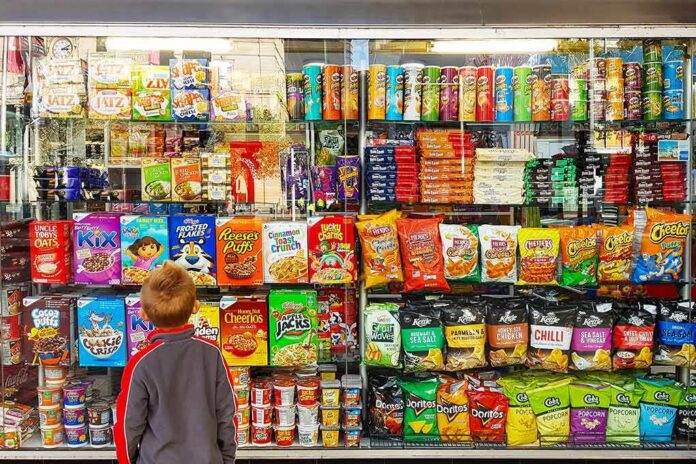
Four out of five toddler foods lining grocery store shelves count as ultra-processed, and researchers say nearly half fail basic nutrition standards meant to protect young children.
Quick Take
- A large U.S. audit found 81% of toddler foods are ultra-processed, and nearly half miss at least one World Health Organization nutrient benchmark.
- Studies in Australia, the United Kingdom, Canada, and Poland show similar patterns of high sugar and salt in foods aimed at babies and toddlers.
- Marketing terms like “no added sugar” or “natural” often mask poor nutrition, since few or no regulations govern these claims.
- Not every toddler food is unhealthy — pureed fruit, vegetable, and meal products often score well, showing snacks are the bigger problem.
What The Latest Audits Actually Found
Researchers at the University of Texas at Austin reviewed more than 2,700 toddler products sold in grocery stores. They found 81% qualified as ultra-processed, and nearly half failed to meet at least one World Health Organization nutrient standard. A separate U.S. study of 651 commercial infant and toddler foods found 60% missed nutritional requirements entirely, and none met international promotion standards.
These aren’t isolated numbers. In the United Kingdom, a long-running tracking study found 88% of child-targeted supermarket products would fail World Health Organization rules for marketing to kids, a pattern that held steady between 2009 and 2017. Sugar, salt, and fat consistently blew past healthy thresholds in both years, showing this isn’t a one-time slip by a few brands.
The Problem Isn’t Limited To One Country
Australia’s own audit of commercial baby and toddler foods concluded that no products met international standards for both nutrition and honest promotion at the same time. Poland’s food supply told a similar story: World Health Organization researchers found more than half of examined products got over 30% of their energy from sugar, with about a quarter having sugar or sweeteners added directly. Canadian shelves showed 59% of products flagged as “high in” a nutrient of concern, mostly sugar.
Children’s yogurts and cereal bars marketed directly to kids also carried more sugar, fat, and saturated fat than the same products sold without kid-friendly packaging. That’s a telling detail. It suggests the marketing itself, not the recipe, drives the difference — companies seem to know sweeter sells better to parents shopping for children.
How Packaging Hides The Truth From Parents
An Australian advocacy report reviewed by ABC News found more than 70% of toddler foods on supermarket shelves missed international nutrition standards, yet many carried claims like “no preservatives” or “natural and organic”. Those words feel reassuring. But they say nothing about sugar content or whether real fruit made it into the jar. The World Health Organization has been direct about this, stating foods for infants and young children should only be promoted if they meet real nutrient and safety standards.
Part of the reason these claims persist comes down to weak oversight. ABC News reported that toddler food companies can market aggressively because, in many places, no specific regulations govern what goes into these foods or how they get advertised. That’s a structural gap, not an accident, and it leaves parents to sort out health claims largely on their own.
Not Every Product Is A Failure
Context matters here. The Rudd Center’s review of American baby and toddler foods found that most products scored well nutritionally, with 100% of pureed fruit, vegetable, and meal products meeting nutrition benchmarks. The exception was snacks, which dragged down the category’s overall reputation. That distinction matters for parents trying to make smart choices without treating every product on the shelf as equally suspect.
What This Means For Families Making Daily Choices
The pattern across countries points to snack-style toddler foods as the main offender, not baby food purees or full meals. Parents watching sugar and sodium intake have real reason for caution with branded toddler snacks, especially ones leaning on health buzzwords. Common sense still applies: read past the front label, check the actual sugar and sodium numbers, and treat “natural” as marketing language rather than a nutrition fact.
Sources:
mindbodygreen.com, uconnruddcenter.org, pmc.ncbi.nlm.nih.gov, topics.consensus.app, iris.who.int, cambridge.org