
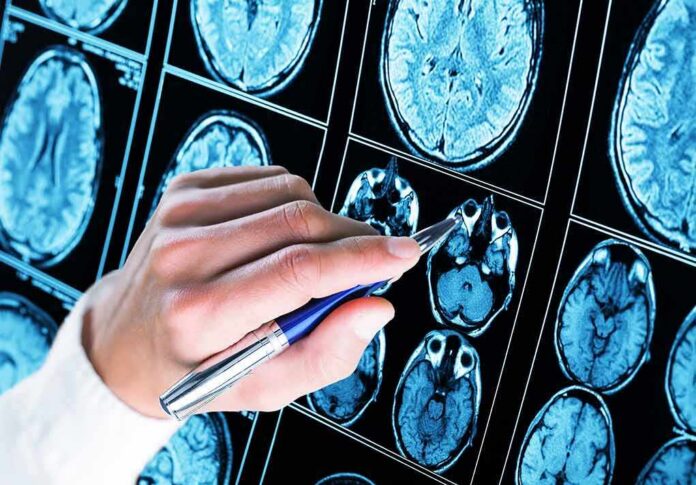
Scientists can now spot signs of brain aging decades before memory loss ever shows up, using nothing more than a single MRI scan.
Story Snapshot
- Researchers can measure brain aging signals in midlife, long before dementia symptoms appear.
- A Duke-led team built a tool that estimates a person’s “pace of aging” from one brain scan.
- The Dunedin Study found brain changes linked to cognitive decline in people as young as 45.
- Scientists still debate how useful these brain-age scores are for guiding real medical decisions today.
What Thousands Of Brain Scans Actually Showed
Researchers have analyzed brain scans from thousands of people to build a picture of how the brain ages over time. The goal is simple: catch decline early, before someone notices memory slips or confusion. That early window matters because most brain diseases build up quietly for years before symptoms ever surface, giving doctors a shot at intervening sooner rather than later.
One of the most striking findings comes from the Dunedin Study, which has tracked the same group of people since birth. Researchers scanned 843 participants at age 45 and measured white matter hyperintensities, small areas of brain tissue damage visible on MRI. They found a clear link between these markers and early cognitive decline, detectable decades before any dementia diagnosis would normally happen.
A Single Scan Can Now Estimate Aging Pace
A Duke University team led by Ahmad Hariri, Terrie Moffitt, Max Elliott, and Ethan Whitman built a tool that measures aging from just one brain scan. Their work, published in Nature Aging in July 2025, gives researchers a reliable way to estimate how fast someone’s brain is aging without years of repeat testing. That kind of efficiency could make large-scale screening far more realistic.
The concept behind these tools is called the Brain Age Gap, or BAG. It measures the difference between a person’s predicted brain age and their actual birth-certificate age. Studies show a wider gap is strongly tied to higher risks of cognitive decline, neuropsychiatric disorders, and even earlier death, making it one of the more closely watched biomarkers in aging research.
How Accurate Are These Brain Age Tools
Accuracy matters a lot here, and the numbers are encouraging. Brain-predicted age measurements have shown strong reliability, with a consistency score of 0.97 when the same scanner is used repeatedly, and 0.92 across different scanners. In adults, the most accurate models report an average error of under five years. In children and young adults, that error can shrink to roughly one year.
Some researchers have used these tools to flag mild cognitive impairment earlier than standard exams would catch it. One brain-aging biomarker built on this approach was validated as a sensitive way to identify early MCI and predict later cognitive decline, a step researchers say offers real potential for clinical use. Others see promise in using brain age scores to guide treatment decisions in Alzheimer’s care.
Where The Science Still Has Limits
Not every study agrees these tools are ready for the doctor’s office. Some research finds that brain age estimates perform about as well as simply measuring gray matter volume, without adding much extra predictive power. Other work found only weak links between brain age and actual memory changes over time, suggesting current models may have limited value as a stand-alone biomarker for individual patients.
Researchers reviewing the field say the technology needs more standardization before it becomes a routine part of checkups. Brain Age Gap scores show real promise as a flexible, modifiable measure tied to brain resilience and disease progression, but experts caution that larger, more consistent validation studies are still needed before it becomes a trusted clinical tool. For now, the science points to real, measurable signals of brain aging showing up far earlier than most people expect, even as researchers keep working to turn those signals into everyday medical guidance.
Sources:
mindbodygreen.com, pmc.ncbi.nlm.nih.gov, pubmed.ncbi.nlm.nih.gov, sciencedaily.com, nature.com, pnas.org, aan.com, habs.mgh.harvard.edu