
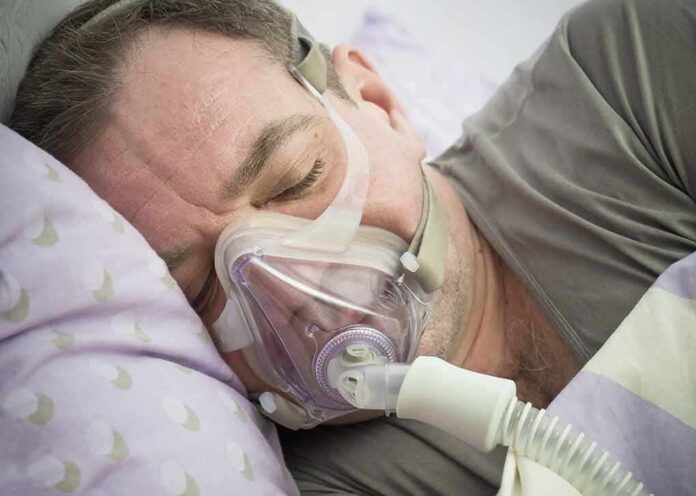
Millions of Americans strap on a CPAP machine every night just to breathe easier, but new research shows the device may also help lift their mood.
Quick Take
- A randomized study found CPAP users had significantly lower depressive symptoms after four months compared to a wait-list group.
- A major analysis of the SAVE trial linked CPAP use to a 20 percent drop in the odds of clinical depression.
- A meta-analysis of 17 studies and nearly 2,000 patients confirmed CPAP improved mood scores versus untreated patients.
- Experts say the strongest mood benefits show up in patients who started treatment already struggling with depression.
What The New Research Actually Found
A randomized wait-list controlled study tracked people with obstructive sleep apnea for four months. Patients using continuous positive airway pressure therapy, known as CPAP, showed significantly lower depressive symptoms than those still waiting for treatment. The CPAP group also reported far less daytime sleepiness, and fewer of them met the clinical threshold for depression by the end of the study period.
That result lines up with earlier findings from the SAVE trial, a large study of heart and sleep health. Researchers there found CPAP use cut the odds of depression by 20 percent compared to usual care. The benefit was strongest in patients who already had depression symptoms before starting treatment, suggesting the machine does more than just fix snoring.
Why Sleep Apnea And Depression Are So Tightly Linked
Obstructive sleep apnea repeatedly interrupts breathing during sleep, jolting the brain awake dozens or even hundreds of times a night without the person fully realizing it. That constant disruption robs the brain of deep, restorative rest. Over time, poor sleep quality feeds directly into mood problems, and researchers have long noticed that people with more severe apnea tend to carry a higher depression risk.
A meta-analysis covering 17 separate CPAP studies and more than 1,900 patients found a clear, measurable improvement in depressed mood among people using the therapy compared to those who did not. The effect size was modest but consistent, with only small differences between individual trials. One sleep-medicine organization reported that nearly 73 percent of apnea patients in a related study saw their depressive symptoms improve once treated with CPAP.
Not Every Study Agrees On How Big The Effect Is
Some researchers caution that the size of the mood benefit shifts depending on how CPAP gets compared. When studies pit real CPAP against a sham device instead of no treatment at all, the depression benefit can shrink or disappear entirely. That pattern suggests part of the effect may come from patients expecting to feel better, not just from the physical treatment itself.
Other reviews found a genuine, if smaller, effect even under stricter comparisons. A systematic review of 20 randomized trials covering more than 4,200 participants confirmed CPAP reduced depression symptoms overall, though the size of that benefit was modest. Researchers also note that people who stick with CPAP most consistently tend to see the biggest mood gains, pointing to adherence as a key piece of the puzzle.
What This Means For Patients Weighing Treatment
For the roughly 30 million American adults believed to have obstructive sleep apnea, many of them undiagnosed, this research adds a real incentive beyond better rest. Depression and poor sleep often feed each other in a frustrating cycle, and breaking one side of that cycle may ease the other. Patients who feel emotionally low alongside their sleep problems now have another reason to stick with treatment.
Doctors still recommend treating depression directly when it’s severe, rather than relying on CPAP alone. But for patients whose low mood tracks closely with poor sleep, fixing the breathing problem appears to offer a real mental health payoff. That’s a meaningful finding for a treatment already recommended for heart health, blood pressure, and daytime alertness.
Sleep specialists now argue that mood screening should become a routine part of apnea care, not an afterthought. Catching depressive symptoms early, alongside the diagnosis of sleep apnea itself, could help doctors set realistic expectations for patients starting CPAP. It also gives families a clearer picture of what improvement should look like beyond simply sleeping through the night.
Sources:
pmc.ncbi.nlm.nih.gov, pubmed.ncbi.nlm.nih.gov