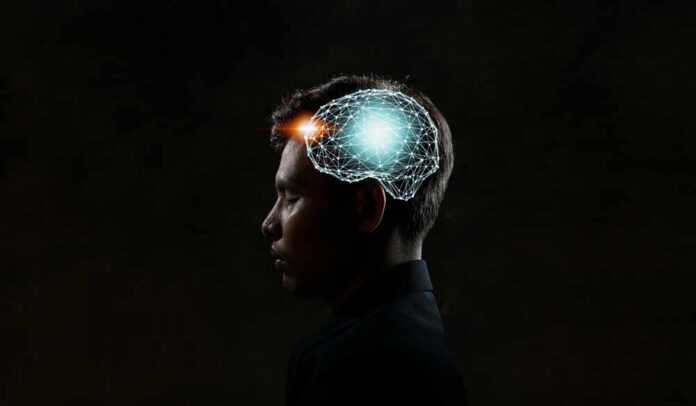
Scientists are now reading the cravings of addiction patients directly from their brains while they navigate their own homes, pinpointing precise electrical signatures that could be silenced with targeted stimulation.
Story Snapshot
- Researchers implanted electrodes in a fentanyl addiction patient’s brain, identifying reproducible alpha-wave biomarkers of craving in real-world home settings over ten days
- Mayo Clinic’s BIONIC initiative tested personalized deep brain stimulation in ten drug-resistant epilepsy patients, aiming to “quiet seizure networks” rather than just mask symptoms
- The “Brains in the Wild” approach studies epilepsy patients freely moving in virtual reality while recording neural activity, capturing human-specific brain dynamics impossible to replicate in animal models
- Bidirectional brain implants now stream data to the cloud, enabling AI-powered analysis of seizures, sleep patterns, and cognitive states in everyday environments
Reading Minds Outside the Laboratory
Dr. Taufik Valiante at the University of Toronto has abandoned the sterile constraints of traditional neuroscience laboratories. His team places electrodes deep in the brains of epilepsy patients, then sends them into virtual reality environments where they walk, explore, and make decisions while scientists capture every electrical whisper from their neurons. This “embodied neuroscience” approach reveals brain network behaviors that remain hidden when subjects lie motionless in scanners. The breakthrough came when Valiante applied this method to a fentanyl addiction patient, discovering that specific alpha-frequency patterns in the subgenual cingulate reliably signaled craving states whether the patient sat in a clinic or walked through their kitchen at home.
From Seizure Prediction to Network Reorganization
Mayo Clinic’s BIONIC initiative represents a fundamental shift in how medicine approaches neurological disease. Rather than simply dampening symptoms with drugs or generic electrical stimulation, researchers now pursue what they call a “cure” through network reorganization. Ten patients with drug-resistant epilepsy received personalized deep brain stimulation during surgical evaluations, with physicians mapping each individual’s unique seizure networks. Dr. Greg Worrell’s BrainRISE system exemplifies this transformation: bidirectional implants that both record aberrant brain activity and deliver tailored stimulation designed to teach neural networks to “forget” their pathological firing patterns. The ultimate goal stretches beyond epilepsy to stroke recovery, traumatic brain injury, and even Alzheimer’s disease.
The Addiction Biomarker Discovery
The fentanyl addiction case illuminates how far neurotechnology has advanced beyond laboratory curiosities. After identifying the patient’s craving signature during initial monitoring, Valiante’s team implanted a Percept device targeting four distinct brain regions. The alpha-band biomarker proved remarkably stable and reproducible across contexts, appearing whether scientists induced cravings in controlled settings or the patient experienced spontaneous urges at home. This consistency matters enormously: a biomarker that fluctuates wildly with environment or time of day offers little therapeutic value. The reproducibility enabled closed-loop stimulation, where the device detects the electrical signature of craving onset and delivers precisely timed pulses to disrupt the pattern before conscious awareness fully forms.
Why Epilepsy Unlocks Brain-Computer Interfaces
Epilepsy patients provide neuroscientists with an unexpected gift: medical necessity justifies placing electrodes exactly where researchers most want to record from. Dr. Brian Lundstrom at Mayo Clinic has capitalized on this access, combining invasive SEEG recordings with non-invasive techniques like transcranial magnetic stimulation and EEG monitoring to map hyperexcitability patterns. Epilepsy’s unpredictability makes it an ideal testbed for brain-computer interfaces that must function reliably despite neural noise and variability. The abnormal synchronization characteristic of seizure networks also offers clear targets for intervention. What scientists learn from quieting these networks translates directly to controlling prosthetic limbs, restoring communication in paralysis patients, or modulating mood disorders through precision stimulation.
Virtual Reality Meets Neural Recording
Traditional neuroscience confined human subjects to hospital beds, limiting researchers to studying brains divorced from the movement, spatial navigation, and decision-making that define human cognition. Valiante’s team shattered this constraint by combining stereo-electroencephalography with immersive virtual environments. Patients wearing SEEG electrodes explore virtual cities, search for hidden rewards, and navigate complex social scenarios while scientists record from hippocampal place cells and prefrontal decision circuits. This integration of movement tracking, gaze patterns, and multi-site neural recordings enables researchers to derive what Valiante calls “cognitive equations,” mathematical relationships describing how human brains compute spatial awareness and goal-directed behavior in ways that appear distinctly different from rodent models.
The Commercial Translation Challenge
BIONIC’s multidisciplinary ecosystem unites clinicians, engineers, and intellectual property specialists to transform laboratory discoveries into commercial therapies. The initiative emphasizes partnerships that can navigate regulatory approval, manufacturing scale-up, and reimbursement negotiations. Mayo Clinic’s deep history in neuromodulation, from early epilepsy surgery to responsive neurostimulation devices, provides both credibility and infrastructure. Valiante previewed a forthcoming Max Planck Center collaboration aimed at accelerating neurotech commercialization. The economic argument proves compelling: personalized stimulation could reduce medication costs, hospitalizations, and lost productivity. Yet the path from ten-patient trials to widespread adoption requires solving formidable challenges in device longevity, surgical complications, and the uncomfortable reality that opening skulls carries risks many patients and physicians hesitate to accept.
Sources:
Personalized brain stimulation approach shows promise for patients with drug-resistant epilepsy
Frontiers in Synaptic Neuroscience – Synaptic alterations in human neocortex
Flexible probes for multi-scale neural recording