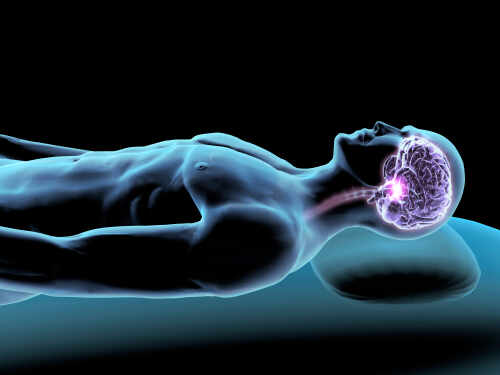
Your brain can leave fingerprints on your blood, and those traces may predict how hard a stroke hits and how well you bounce back.
Quick Take
- A small stroke study found higher optimism tracked with lower inflammation markers and milder strokes.
- Researchers measured optimism with a standard questionnaire and compared it with IL-6 and CRP blood markers.
- Patients with more optimism also showed less physical disability three months after stroke.
- Earlier large population research links optimism and pessimism to inflammation patterns even outside stroke.
The 2020 stroke signal: optimism, lower inflammation, less disability
A preliminary analysis presented at the American Stroke Association’s International Stroke Conference in Los Angeles put a surprising variable next to the usual stroke suspects: outlook. Researchers looked at 49 stroke survivors and found that higher optimism levels correlated with lower IL-6 and CRP, reduced stroke severity on the NIH Stroke Scale, and less physical disability after three months. TNFα did not follow the same pattern, a reminder that inflammation is not one on/off switch.
Those numbers matter because IL-6 and CRP show up again and again in cardiovascular risk discussions, yet clinicians rarely talk to patients about them in plain language. IL-6 helps drive inflammatory signaling; CRP often rises when the body is responding to inflammation. When those markers run hot after a vascular event, recovery can get complicated. The study’s hook is simple: the “mental” variable lined up with the “medical” ones in a way worth chasing.
How the researchers measured optimism, and why that matters
Medical research lives or dies by measurement. This work used the Life Orientation Test-Revised, a widely used tool that captures a person’s general expectation that good things will happen. That matters for skeptical readers because it avoids fortune-cookie “positive vibes” talk and anchors optimism to a consistent scoring method. The inflammation markers came from blood tests, while stroke severity came from the NIH Stroke Scale, a standard clinical yardstick rather than a subjective impression.
The study also matters because it was built as a secondary analysis from an existing neurological diseases repository, completed before it was presented in early 2020. That design can limit what you can claim about cause and effect, but it can also reduce “research theater” because the data already existed before the optimism angle became the headline. With only 49 survivors, the results should read as a pilot flare shot into the night sky, not a final map.
What could connect a mindset to inflammation after a stroke
Optimism is not magic; it is a pattern of expectations that can shape stress responses and daily choices. Prior research in cardiovascular populations has proposed several pathways: less chronic stress activation, better sleep, more physical activity, and higher adherence to treatment plans. Those behaviors can influence weight, blood pressure, and metabolic health, which in turn can influence inflammation. The more interesting loop is physiological: stress systems can push inflammatory signaling upward over time.
Evidence outside stroke strengthens the plausibility. Large cohort work such as the Multi-Ethnic Study of Atherosclerosis found that optimism and pessimism track with inflammation markers and cardiovascular risk, even after accounting for factors like depression in some analyses. Research has also examined how optimism relates to immune function and stress-related inflammatory responses. That doesn’t prove optimism “cures” anything, but it does argue that outlook can show up in measurable biology, not just mood.
What “morale-boosting” looks like when it’s not cheesy
Researchers and public health voices have discussed practical interventions: gratitude exercises, structured positive activities, and exposure to calming environments such as nature, all designed to reduce stress load rather than sell fantasy. A Norwegian research thread has reported reduced inflammation tied to optimism-building approaches, and other work has explored how daily positive events may blunt inflammatory responses. The through-line is not forced cheerfulness; it is repeated, concrete experiences that retrain attention away from constant threat scanning.
Families can translate that into routines that don’t insult anyone’s intelligence: predictable social contact, short daily walks as allowed, music that lowers agitation, rehab goals broken into visible wins, and honest planning that replaces chaos with order. That last piece matters because uncertainty is gasoline on the stress fire. A patient who knows the next appointment, the next exercise set, and the next small milestone often feels less trapped, and that can influence recovery behaviors day to day.
What to do with this evidence right now
The most responsible takeaway is narrow but useful: optimism looks like a candidate factor in stroke recovery worth measuring and strengthening, alongside standard medical care. Clinicians can screen for pessimism and distress the way they screen for fall risk, then connect patients to support that improves engagement in rehab. Patients and caregivers can treat “outlook” as a daily practice, not a personality trait. The unanswered question remains the juicy one: can changing optimism change inflammation and outcomes?
Future research needs larger samples, tighter designs, and clarity on which inflammatory markers move and which do not. The 2020 findings already showed TNFα did not respond like IL-6 and CRP, a clue that the biology is selective. If the field proves that targeted optimism interventions improve recovery metrics, it could become one of the rare win-wins in modern health care: low cost, low risk, and aligned with the idea that mindset and discipline can support the body’s repair work.
Sources:
Optimism reduces stroke severity, inflammation
Optimism reduces stroke severity, inflammation
A prospective study of optimism and inflammatory markers in postmenopausal women
The New Science of Optimism and Longevity