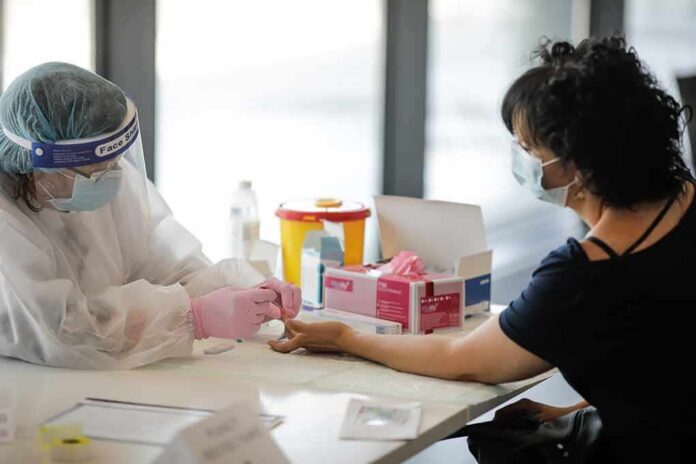
Doctors now agree on a clear roadmap for catching cervical cancer early, and it starts the moment a woman turns 21.
Story Snapshot
- Major medical groups recommend cervical cancer screening from age 21 through 65, with the test type changing as women get older.
- Women 21 to 29 get a Pap test every three years, while women 30 to 65 can switch to an HPV test every five years.
- New 2026 guidance allows some women to collect their own HPV sample, as long as their clinic can properly track and follow up on results.
- Abnormal results trigger a set process, from closer monitoring to a biopsy, but out-of-pocket costs sometimes stop women from finishing that process.
The Screening Schedule Every Woman Should Know
The American College of Obstetricians and Gynecologists (ACOG) and the United States Preventive Services Task Force (USPSTF) both back the same basic plan. Screening starts at 21 and continues through 65. Between 21 and 29, women get a Pap smear, which checks cervical cells under a microscope, once every three years. This age group skips HPV testing alone because the virus is common and often clears on its own in younger women.
Once a woman turns 30, the recommended test can change. ACOG now says testing for high-risk strains of human papillomavirus (HPV) every five years is the preferred method for ages 30 to 65. Cotesting, which combines the Pap smear and HPV test, remains an accepted option too. The five-year gap sounds long, but it reflects how slowly HPV usually turns into cancer, giving doctors a wide safety window.
A notable shift in the 2026 guidance involves who collects the sample. ACOG says patients can now swab themselves for HPV testing every three years, as long as the clinic has a system to notify patients and follow up on results. This matters for women who avoid pelvic exams out of discomfort, fear, or past trauma. Self-collection could pull more women into the screening system instead of letting them skip it entirely.
What Happens After an Abnormal Result
An abnormal Pap or HPV result does not mean cancer. It means doctors need more information. The National Cancer Institute outlines a risk-based system built by the American Society for Colposcopy and Cervical Pathology (ASCCP), which sorts patients into different paths depending on their risk level. Some women get treatment right away. Others get a colposcopy, a closer look at the cervix using a lighted magnifying tool, followed by a biopsy if something looks suspicious.
During a colposcopy, doctors are told to biopsy any abnormal-looking tissue, and in some cases they sample inside the cervical canal too. Depending on what the biopsy shows, a woman might return for retesting in one year, three years, or simply go back to her normal five-year schedule. This tiered system exists because most cervical cell changes never become cancer, and doctors want to avoid overtreating women whose bodies would clear the problem naturally.
The Cost Problem Standing Between Guidelines and Care
Good guidelines only help if women can actually afford to follow them. ACOG has pushed federal health officials to require no-cost coverage for any additional testing or pathology needed after an abnormal screening result. Without that protection, a follow-up colposcopy or biopsy can come with a separate bill, even though the original screening test was free under most insurance plans.
Lawmakers in Oregon took direct aim at this gap. State legislators heard testimony describing women hit with $700 to $1,000 in surprise bills after an abnormal Pap smear, costs tied to the follow-up tests meant to rule out cancer. Oregon’s legislature responded by passing a bill requiring free follow-up screening exams, a move that treats the diagnostic workup as part of the same preventive service, not a separate charge.
HPV Vaccine: Common Questions
1,
Q: Can you still get cervical cancer after being vaccinated?
⁰A: Yes, but the risk drops sharply. The vaccine covers only certain high-risk types, and it can't clear an infection you already have.2,
Q: Does protection only last ten years?…— Paulina宝姐 (@flyingfishbug) September 29, 2026
Cost is not the only barrier. Outreach efforts aimed at Native communities point to fear, shame, and decades of mistrust in the medical system as reasons some women delay both screening and follow-up care. Guidelines can be scientifically sound and still fail in practice if patients cannot afford them, do not trust the system delivering them, or simply never hear about the schedule in plain language. Closing that gap matters as much as writing the guideline itself.
Sources:
youtube.com, acog.org, uspreventiveservicestaskforce.org, asccp.org, pmc.ncbi.nlm.nih.gov, cdc.gov, drugs.com