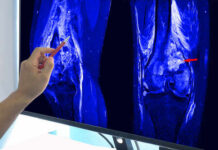

One Alzheimer’s patient’s brain told two completely different stories depending on which fold researchers examined.
Quick Take
- Penn Medicine scientists studied the brain of a deceased Alzheimer’s clinical trial patient after an anti-amyloid treatment
- Brain ridges cleared of amyloid plaques had almost no tau damage, while nearby grooves that kept plaques showed heavy tau buildup, inflammation, and tissue loss
- A 2019 study of an earlier amyloid vaccine found a similar pattern lasting up to 14 years after treatment
- Other research shows removing amyloid doesn’t always stop tau or protect brain cells, so doctors say more study is needed
One Brain, Two Very Different Neighborhoods
Researchers at Penn Medicine examined the brain of a single Alzheimer’s disease patient who had taken part in a clinical trial before death. They found something striking. The raised ridges of brain tissue, called gyri, had lost most of their amyloid plaques and showed very little tau, the toxic protein tangle linked to memory loss.
Right next door, in the grooves of the same brain called sulci, the picture flipped. These folds still held onto amyloid plaques, and they also carried much more tau, more inflammation, and more dying brain tissue. The comparison happened inside one person’s brain, which strengthens the finding since outside factors like genetics stayed the same.
A Pattern Seen Before, Over Many Years
This is not the first time scientists have spotted this split. A 2019 study published in the journal Brain looked at patients who received an experimental amyloid vaccine 14 years earlier. Areas of the brain left plaque-free had fewer tau-damaged nerve cells than areas where plaques remained.
That earlier study also found something worth remembering. Even in the plaque-free areas, tau damage elsewhere in the brain remained widespread, reaching advanced stages known as Braak V and VI. Clearing plaques in one spot did not mean the whole brain escaped tau’s grip.
Why Amyloid and Tau Are Linked In The First Place
Scientists have a working theory for why removing amyloid might slow tau in nearby tissue. A 2025 study in Science Translational Medicine tracked 309 people using brain scans and found amyloid buildup seems to rev up connections between brain regions, letting tau spread faster along those busy neural highways.
If that theory holds, clearing amyloid could calm down that hyperactive network traffic and slow tau from spreading into new territory. It’s a reasonable mechanism, and it fits what Penn Medicine saw in its single case. But a mechanism that makes sense on paper still needs proof across many more brains.
The Catch: Clearing Plaques Doesn’t Always Stop The Damage
Not every study agrees. A 2025 paper in Brain tested an Alzheimer’s model and reduced amyloid buildup by about 70 percent. Despite that dramatic drop, tau pathology kept progressing and synapse loss continued unchanged. Removing the plaques did not reverse the deeper damage already underway.
A 2026 review added another wrinkle. Even in human brain regions where antibody treatments wiped out plaques almost completely, researchers still found lingering tau tangles, dying neurons, and in some cases immune cells swarming blood vessels. Clearing amyloid, in other words, is not a guaranteed clean slate.
What This Single Case Can And Cannot Prove
Penn Medicine researchers are careful to note this comes from one deceased patient, not a large trial. It cannot tell doctors how much amyloid needs to go to produce lasting benefit, and it says nothing directly about whether the patient’s memory or daily function improved.
That caution fits a broader pattern in Alzheimer’s research. Drugs like lecanemab and donanemab have shown statistically real but modest slowing of decline in large trials, and some independent reviews call the real-world benefit for patients smaller than hoped. A striking brain scan finding is a clue, not a cure, and patients deserve that straight talk.
Sources:
sciencedaily.com, academic.oup.com, pennmedicine.org, science.org, onlinelibrary.wiley.com