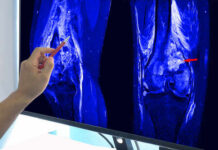

A single 40-minute high-intensity interval training session spiked a key bone-building marker in women.
Story Highlights
- A 40-minute high-intensity interval training workout raised P1NP, a bone formation marker, within hours.
- The signal links to muscle-driven messengers like interleukin-6 and adiponectin during intense exercise.
- Repeated training, not one workout, drives lasting bone density gains in most trials.
- Programs at or above 40 minutes per session tend to show stronger bone results in postmenopausal women.
What the new study actually measured
Researchers tracked women who performed a 40-minute high-intensity interval training session and measured their blood before and after the workout. They focused on P1NP, a protein fragment that signals new collagen building in bone. After the very first session, P1NP rose by about 8 to 21 percent within the study’s reported confidence range. After 16 weeks, a final session still produced a 3 to 16 percent rise. These shifts point to an acute “go build” message for bone cells.
The team also tied the spike to exercise messengers that muscle releases under stress. Interleukin-6 and adiponectin rose with the training, and these signals can nudge bone-forming cells. This helps explain why intense intervals may act like a brief biochemical push toward formation. The study’s design followed women over 16 weeks with repeated testing around the first and last sessions, which strengthens confidence that the acute effect was not a one-off quirk.
What a spike in P1NP means for your bones
P1NP is not bone density. It is an early, upstream marker that hints at building activity. Many trials show exercise can move bone turnover markers fast, even the same day, while actual bone density shifts slowly over months. Reviews in postmenopausal women support consistent training to move the needle at the spine and hip, but they stress the need for sustained programs, not single events. Use a burst as a trigger, then stack sessions to build structure.
Session length and intensity matter. A recent review of resistance programs found sessions at or above 40 minutes per workout delivered better bone outcomes in postmenopausal women than shorter bouts. Other high-intensity resistance and impact trials report gains at the lumbar spine and femoral neck, and they note good safety when supervised and progressed with care. The pattern is clear: load the skeleton, do it often enough, and give it time to remodel.
HIIT’s place in a bone-smart plan
High-intensity intervals deliver strong muscle drive, high heart rate, and ground reaction forces when movements involve impact. These are all friendly signals for bone, within reason. Pair HIIT days with heavy, well-coached lifts and some impact work, like jumps scaled to your level. Progress volume and height slowly. Aim for two to three quality sessions per week, 40 minutes each, with recovery between. Train the hips and spine, since those areas matter most for long-term independence.
Build the foundation around protein, vitamin D, and calcium from diet first. Add sunlight and short outdoor walks for a double win on mood and balance. If you have low bone density, get a scan and talk to your clinician before adding impact.
How to turn a signal into structure
Start with one 40-minute HIIT workout each week for three weeks. Keep intervals short, like 30 to 60 seconds hard, then 60 to 120 seconds easy. Use low-skill moves you can control, such as cycling sprints or brisk uphill walks. Add a second weekly session once you recover well. Layer in resistance training that targets legs, hips, and back. Stay the course for six to eight months. That is the time frame where bone density changes start to show in trials.
Expect the blood markers to move first and fade within a day. That is normal. The win comes from the repeat message, week after week, that tells bone to adapt. The new study shows a single workout can flip that switch. The broader literature shows a steady plan can keep it on long enough to matter, especially with 40-minute sessions and smart loading. That is how you turn an acute spark into a stronger frame you can trust.
Sources:
pmc.ncbi.nlm.nih.gov, ouci.dntb.gov.ua