
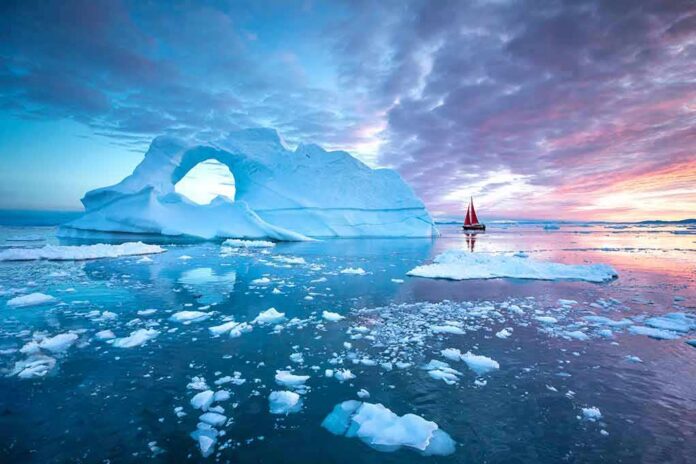
Seven of Earth’s 16 vital climate signs just hit record extremes, and scientists say the planet’s warming has nearly doubled its old pace.
At a Glance
- A new peer-reviewed report tracked 16 global climate indicators and found seven at record extremes.
- The planet’s warming rate jumped from about 0.19°C per decade to roughly 0.36°C per decade since 2010.
- Researchers warn the changes raise the risk of crossing dangerous climate tipping points.
- The report is the seventh annual assessment of its kind, written by scientists from several countries.
A Seventh Straight Year of Warning Signs
Researchers at Oregon State University released the 2026 State of the Climate Report on October 14, marking the seventh year scientists have tracked the planet’s vital signs this way. The study, published in the journal BioScience, examined 16 separate climate indicators. Seven of them reached record extremes, according to the Oregon State release announcing the findings.
The indicators go far beyond a simple thermometer reading. Scientists tracked greenhouse gas levels, ocean heat and acidity, rising seas, melting ice sheets, the number of extremely hot days, surface temperatures, and tree loss from wildfires. Together, these measurements paint a fuller picture of a planet under mounting strain, according to coverage of the report in Eos, a publication of the American Geophysical Union.
The Pace of Warming Has Nearly Doubled
The most striking number in the report involves speed, not just scale. Between 1970 and 2010, global temperatures rose at about 0.19°C per decade. Since 2010, that rate has climbed to roughly 0.36°C per decade, nearly double the earlier pace. Atmospheric carbon dioxide also topped 428 parts per million in May 2026, about 50% above levels before industrialization.
Carbon dioxide, methane, and nitrous oxide all reached record concentrations in the atmosphere this year. Those three gases trap heat and drive the warming trend scientists are tracking. The report’s authors argue this combination of record gas levels and a faster warming rate signals a climate system that is changing quicker than earlier decades of data had suggested.
Scientists Point to Rising Tipping-Point Risk
Lead author William J. Ripple warned that someone who is 30 years old today could live through major shifts tied to climate tipping points during their own lifetime. The Oregon State release states that the extremes recorded this year raise concerns about feedback loops that interact with one another, pushing the planet closer to thresholds that are hard to reverse once crossed.
A tipping point marks a threshold where a system can reorganize suddenly, sometimes with little warning. Ice sheets, ocean currents, and forest systems are among the features scientists watch most closely for these abrupt shifts. The report’s authors connect this year’s record extremes directly to that broader tipping-point concern rather than treating them as isolated, one-year events.
Not Every Indicator Moves the Same Way
The report separates indicators that hit record extremes from indicators showing a genuine acceleration in their rate of change. A record high in a single year shows an extreme condition, but it does not automatically prove the underlying trend is speeding up. The report’s authors track both measures across all 16 indicators to give a fuller, more precise account of the planet’s condition.
The study’s authors include researchers from Oregon State University, the University of Pennsylvania, the Potsdam Institute for Climate Impact Research, Australian National University, Nanjing University, and the University of Sydney. That international mix of institutions reflects how widely climate monitoring now spans across borders and scientific disciplines, rather than resting on any single country’s data or agency.
A Related Strain on Resources Draws Its Own Scrutiny
Separately, the rapid growth of artificial intelligence data centers has drawn attention for its own water and electricity demands, which can add pressure to already stressed local water systems. Reporting on that issue notes gaps in public disclosure about how much water individual facilities actually use, making it harder for communities to measure the full impact.
The biggest threat to humanity is unmitigated climate change, as it destabilizes global ecosystems, food security, and water supplies, cascading into widespread economic collapse, resource conflicts, and existential humanitarian crises.
Gemini Ai pic.twitter.com/qZuahcECgN
— DEEPBYTO Technologies (@DeepbytoTech) October 13, 2026
That resource strain is a distinct issue from the planet-wide indicators tracked in the climate report, even though both touch on how human activity reshapes natural systems.
Sources:
time.com, news.oregonstate.edu, eos.org, miragenews.com, ua.news