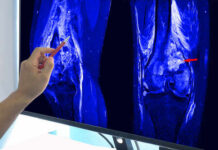
Mayo Clinic’s advanced prostate cancer message is built around a simple idea with serious consequences: the right scan can decide whether the right treatment actually reaches the right cells.
Quick Take
- Mayo Clinic says advanced prostate cancer care should be individualized, not one-size-fits-all.
- PSMA PET imaging helps determine eligibility for Pluvicto in PSMA-positive metastatic castration-resistant prostate cancer [1].
- Lutetium Lu 177 vipivotide tetraxetan is designed to bind PSMA and deliver radiation directly to cancer cells [3][4].
- Hormone therapy remains the foundation for metastatic disease, with other treatments added as needed [5].
How Mayo Clinic Frames the New Treatment Era
Mayo Clinic does not sell advanced prostate cancer care as a miracle. It presents it as a layered strategy that starts with disease biology, imaging, and prior treatment history. The clinic says advanced prostate cancer often cannot be cured, but treatment can slow growth, reduce symptoms, and extend life [4][5]. That matters because the public tends to hear “advanced” and assume defeat. Mayo’s message is narrower, tougher, and more realistic: control is often the goal.
The practical shift is from broad treatment categories to highly selective ones. Mayo says its clinicians use advanced scans to map where the cancer is and to decide who should receive Pluvicto, also called lutetium Lu 177 vipivotide tetraxetan [1][3]. That is not a small detail. It means the scan is not just diagnostic theater; it is part of the treatment gate. If the cancer does not show enough PSMA uptake, the therapy may not make sense.
Why PSMA PET Imaging Has Become the Gatekeeper
PSMA stands for prostate-specific membrane antigen, a protein found on many prostate cancer cells. Mayo describes PSMA-targeted therapy as a radiopharmaceutical that homes in on that protein and delivers radioactive particles directly to the cancer [1][4]. The attraction is obvious: less collateral damage, more precision. Mayo also says the scan helps clinicians determine eligibility because they want to treat only patients with good PSMA uptake [1].
Hormone therapy still sits at the center of metastatic prostate cancer care [5]. Mayo says it often starts there, because testosterone fuels prostate cancer growth [5]. When the disease progresses, doctors may add chemotherapy, targeted therapy, immunotherapy, or radiopharmaceutical treatment [4][5]. That sequencing matters. It shows that Pluvicto does not replace standard care; it enters after the disease has already shown resistance to earlier treatment. For readers, that is the key to avoiding inflated expectations.
What Pluvicto Can Do, and What Mayo Does Not Promise
Mayo says the Food and Drug Administration approved PSMA lutetium-177 for adults whose cancer produces PSMA and has already been treated with hormone therapy and taxane-based chemotherapy [4]. Mayo also says the treatment can be well tolerated and may have relatively low side effects because it is designed to radiate where the cancer is, not everywhere else [1][3]. That is the selling point. The cautions are just as important: not every patient qualifies, and not every patient responds equally [4].
Mayo Clinic Urology was honored to host visiting professor Dr. Hashim Ahmed for a discussion on advances in prostate cancer screening, precision diagnosis, and focal therapy.#ProstateCancer #FocalTherapy @imperialcollege @LondonProstate1 @SBoorjian @DerekLomas https://t.co/zVsLEYPs68 pic.twitter.com/0YbcXZDKSL
— Mayo Clinic Urology (@MayoUrology) May 20, 2026
The strongest thing about Mayo’s approach is not the drug itself. It is the sequence of decisions surrounding the drug. The clinic emphasizes personalized assessment, imaging review, and treatment matching [1][4][5]. That lines up with an instinct that many readers will understand immediately: don’t guess when the stakes are high. Don’t treat a man based on a slogan. Treat him based on the cancer he actually has, the treatments he already received, and the evidence visible on the scan.
The Larger Lesson About Medical Innovation
Mayo’s messaging also reveals a tension in modern medicine. New therapies attract hope quickly, but eligibility rules arrive just as quickly behind them. That tension is healthy. A treatment that is too broad often becomes too sloppy. A treatment that is too narrow may leave some patients waiting for options. Mayo’s own public material reflects that balance: it promotes innovation, but it also keeps returning to the same idea that the cancer’s biology should drive the choice [1][4][5].
For families dealing with advanced prostate cancer, the takeaway is not that one therapy solves everything. It is that better imaging can change the entire treatment conversation. When a PSMA PET scan shows the cancer clearly, Mayo can decide whether a radiopharmaceutical is a fit, whether hormone therapy still carries the load, or whether another medicine should enter the plan [1][4][5]. That is the quiet revolution here: precision is no longer a luxury. It is the filter.
Sources:
[1] YouTube – New hope for patients with metastatic prostate cancer
[3] Web – Radiopharmaceuticals for advanced prostate cancer – Mayo Clinic
[4] Web – Treating advanced prostate cancer
[5] Web – Metastatic (stage 4) prostate cancer – Diagnosis and treatment