A tiny worm fed magnet-making bacteria lived nearly half again as long as its untreated peers, and scientists think they know why.
Quick Take
- Chinese researchers fed roundworms a magnetotactic bacterium called AMB-1 and saw a 43.39% jump in average lifespan.
- Worms went from living about 17 days to nearly 25 days on average.
- The bacteria also protected nerve function and gut health in aging worms, not just added days.
- The team traced the effect to blocking ferroptosis, a form of cell death tied to iron buildup and oxidative damage.
What The Researchers Actually Did
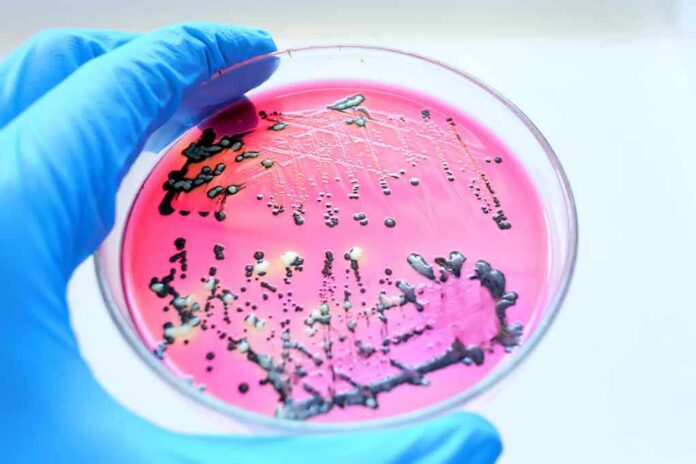
Scientists at the Hefei Institutes of Physical Science, part of the Chinese Academy of Sciences, led by Professor An Xu, fed Caenorhabditis elegans worms a steady diet of Magnetospirillum magneticum AMB-1. This bacterium naturally builds tiny internal magnets called magnetosomes. The team wanted to know if that magnetic trait could change how the worms aged, not just whether the bacteria were edible or harmless.
The results were striking. Worms fed AMB-1 lived an average of 24.62 days, compared to 17.17 days for worms that did not get the bacteria. That works out to a 43.39% increase in mean lifespan, a number now repeated across science outlets covering the study. For a lab worm with a life measured in weeks, that gain is enormous.
The paper, published in Free Radical Biology and Medicine, did not stop at counting days. Researchers also found the treated worms kept sharper nerve function and healthier intestines into old age, meaning the bacteria improved quality of life during those extra days, not just the quantity of them.
Why Magnets And Iron Matter Here
The team’s key discovery involves a process called ferroptosis, a type of cell death driven by excess iron and fat oxidation inside cells. As animals age, iron can build up and trigger this damaging chain reaction. The Chinese researchers found that AMB-1 suppressed this process in the worms, cutting down iron accumulation and the cellular damage that follows.
This fits a pattern longevity scientists have documented for years. Other studies have shown that blocking ferroptosis through different methods, like limiting iron retention or stopping lipid damage, can meaningfully extend worm lifespan on its own. One earlier paper found that shutting down this same death pathway led to major healthspan gains in the same species. AMB-1 appears to be a new, natural way to reach a similar result.
What The Worm Model Can And Cannot Tell Us
Caenorhabditis elegans has earned its place as the go-to animal for aging research. It lives only a few weeks, its genes are well mapped, and scientists can run thousands of trials quickly. That makes it excellent for spotting biological mechanisms fast, but those same strengths carry a limit worth stating plainly: dramatic worm results do not automatically translate to mice, let alone people.
Static magnetic fields alone have shown mixed effects on these same worms in past research, sometimes extending life and sometimes shortening it depending on strength and exposure. That history matters here. It tells us the mechanism, not just the presence of anything magnetic, is what counts. AMB-1 seems to work through its biology and iron handling, not simply because it hums with a magnetic field.
Where This Research Points Next
For readers scanning headlines about a 43% longer life, the honest takeaway is that this is a real, peer-reviewed finding in a widely used lab animal, not a human treatment sitting on a pharmacy shelf. Researchers now have a clear biological trail, ferroptosis suppression through magnetotactic bacteria, worth chasing into mammals. That is how legitimate anti-aging science moves: one careful, verified step at a time, starting exactly where this team started.
The bigger story is what this adds to a growing body of evidence that iron control inside cells is a major lever in how organisms age. Whether magnetic bacteria ever matter for human health remains an open question for future labs to answer, but the mechanism uncovered in Hefei gives scientists a fresh, concrete target worth testing further.
Sources:
sciencedaily.com, english.cas.cn, pubmed.ncbi.nlm.nih.gov, nature.com, diariouno.com.ar, journals.biologists.com