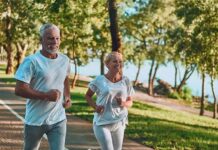

Just 150 minutes of weekly exercise can make your brain appear nearly one year younger, turning back the clock on aging in ways science never imagined possible.
Story Highlights
- AdventHealth trial showed aerobic exercise reversed brain age by 0.6 years versus 0.35 years faster aging in controls.
- UCSF discovered liver protein TNAP, released during exercise, strengthens blood-brain barrier to protect cognition.
- Midlife adults aged 26-58 gained measurable benefits from CDC-recommended 150 minutes of moderate-to-vigorous activity weekly.
- Resistance training yielded even larger effects, reducing brain age by 1.4 to 2.3 years.
- Mechanisms remain partly mysterious, hinting at untapped neuroprotective pathways.
AdventHealth Trial Quantifies Brain Rejuvenation
AdventHealth Research Institute enrolled 130 healthy adults aged 26-58 in a 12-month randomized controlled trial. Participants exercised 150 minutes weekly with moderate-to-vigorous aerobic activity, including two 60-minute supervised sessions and home workouts. MRI scans measured brain-predicted age difference (brain-PAD). The exercise group reduced brain-PAD by 0.6 years. Sedentary controls increased brain-PAD by 0.35 years, creating a one-year gap. Dr. Lu Wan led the study, published January 22, 2026, in the Journal of Sport and Health Science.
UCSF Unlocks Exercise’s Liver-to-Brain Mechanism
UCSF researchers revealed exercise prompts the liver to release tissue-nonspecific alkaline phosphatase (TNAP). This protein crosses into the brain and fortifies the blood-brain barrier, which leaks with age and invites inflammation linked to Alzheimer’s. Mouse experiments confirmed causality: blocking TNAP in old mice cut inflammation and boosted memory; excess TNAP in young mice impaired cognition. February 2026 announcement tied this to human brain protection. Facts align solidly with conservative emphasis on personal responsibility through accessible habits like exercise over costly drugs.
Resistance Training Delivers Superior Brain Gains
A separate LISA trial with 309 participants tested resistance training. Moderate protocols shaved 1.4 years off brain age; heavy training achieved 2.3 years reduction. Heavy sessions also boosted prefrontal cortex connectivity, vital for executive function. These gains exceeded aerobic results, suggesting combined routines maximize benefits. Dr. Kirk Erickson, senior author on the aerobic study and AdventHealth’s Director of Translational Neuroscience, stressed midlife as prime intervention time before decline accelerates.
Why Traditional Explanations Fall Short
Researchers expected fitness gains, blood pressure drops, or BDNF elevations to drive results. None statistically explained brain-PAD shifts. Dr. Wan noted unknown pathways likely contribute, including inflammation control, vascular improvements, or structural tweaks. This complexity underscores exercise’s broad power, beyond simple metrics. Common sense prevails: free movement trumps unproven pills, embodying self-reliance core to American values. Uncertainties persist on older or impaired groups.
How Much Exercise You Need to Slow Down Brain Aging, According to Science https://t.co/TEzTlOtlxu pic.twitter.com/DX51TggvUf
— Healthy Hoss 🍎 (@HealthyHoss) February 26, 2026
Implications Reshape Prevention Strategies
Midlife exercise validates CDC guidelines, offering immediate steps against dementia risk. Long-term, population adoption could slash Alzheimer’s cases, easing healthcare burdens. Brain-PAD emerges as a trackable biomarker; TNAP opens drug targets. Salk Institute named 2026 the Year of Brain Health Research, spotlighting these findings. Affected groups span midlife workers to seniors, fitness sectors to policymakers. One-year brain shifts compound over decades, per Dr. Erickson, demanding action now.
Sources:
Scientists Find Mechanism How Exercise Protects Brain
ScienceDaily Release on Exercise and Brain Aging
Randomized Controlled Trial Resistance Exercise and Brain Aging Clocks
PubMed Entry on Brain Aging Study
2026 The Salk Institute’s Year of Brain Health Research