The most powerful lung cancer technology of this decade is not a miracle drug but a five‑minute scan that quietly saves lives before symptoms ever appear.
Story Snapshot
- Lung cancer often stays silent until it is advanced, but certain warning signs should never be ignored.
- A yearly low‑dose computerized tomography scan can catch deadly tumors early for people at higher risk.[3][5]
- Treatment now depends on stage and tumor biology, not one-size-fits-all chemo.[4]
- Personal responsibility—quitting smoking, showing up for screening, asking about options—still makes the biggest difference.
Why Lung Cancer So Often Sneaks Up On People
Lung cancer remains the leading cause of cancer death worldwide, largely because it hides in plain sight.[4][5] Early tumors can sit quietly in the spongy tissue of the lung, growing for years without causing pain or breathing problems.[5] By the time a stubborn cough, chest pain, or coughing up even a small amount of blood shows up, the disease is often advanced and harder to cure.[5] That silence is exactly why experts keep pushing awareness and screening, especially for people with a long history of smoking.[3][5]
Symptoms, when they finally show, tend to sound deceptively “ordinary.” A new cough that does not go away, hoarseness, shortness of breath, wheezing, or unexplained weight loss are easy to blame on age, allergies, or being “out of shape.”[4][5] If something in your chest changes and stays changed, that is a signal to see a professional, not a cue to tough it out.[4][5]
Who Actually Needs Lung Cancer Screening
Lung cancer screening is not a fishing expedition on healthy twenty‑somethings; it targets people at clearly higher risk.[3][5] Mayo Clinic and national guidelines focus on adults roughly between ages 50 and 80 with a significant long-term smoking history, especially those who still smoke or who quit within the last 15 years.[3][5] That age and exposure window reflects decades of trial data showing that screening these groups with low‑dose computerized tomography reduces their chance of dying from lung cancer.[3]
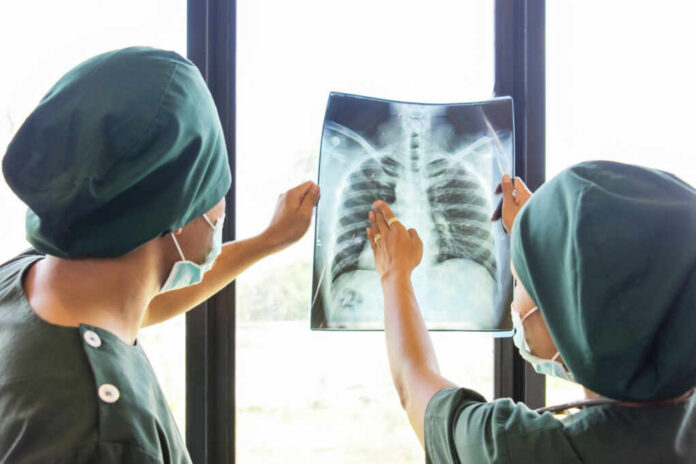
The actual test is almost anticlimactic. You lie on a table that slides through a computerized tomography scanner while it takes multiple low‑dose X‑ray images of your chest; no needles, no contrast dye, no prep, and it takes just minutes.[2][3] Those images let doctors see the lungs in detail, hunting for very small cancers long before they cause symptoms.[2][3] For people who meet the criteria, that annual scan becomes a kind of insurance policy against the disease’s talent for ambush.
The Catch With “Early” Detection: Spots, Scares, And Tradeoffs
Low‑dose computerized tomography does not only find cancer; it also finds “something.” Between one‑quarter and more than half of people will have small lung nodules that need a repeat scan or closer follow‑up, and most of those spots are not cancer.[2] Critics worry about anxiety, radiation exposure, and unnecessary procedures. The Mayo experts acknowledge these issues but judge that, for the properly selected high‑risk group, the mortality benefit outweighs the downsides when doctors use clear protocols for follow‑up.[2][3][5]
Radiation is another honest concern. Because screening recurs every year, physicians deliberately use low‑dose settings and avoid extra imaging unless the finding truly demands it.[2][3] Use powerful tools where they matter, but do not spray technology at people who do not need it. The other limit is health status. Once someone is too frail to safely undergo possible biopsies or surgery, the balance changes, and continuing screening can stop being wise.[2][3][5]
What Happens After A Diagnosis: Stage, Scalpel, And Smart Drugs
When a scan or a symptom leads to a diagnosis, the first decisive question is stage—how large the tumor is and whether it has spread.[4] For early, localized lung cancer, treatment often starts with surgery to remove the tumor and nearby tissue.[4] If the cancer is larger or has reached lymph nodes, surgeons may still operate but combine it with chemotherapy, radiation, or other treatments. Once it has spread to distant organs, cure becomes unlikely, and the goal shifts to controlling disease and preserving quality of life.[4]
The second decisive question is what the tumor is made of at the molecular level. Modern lung cancer care does not treat all tumors as equal. Mayo Clinic emphasizes testing tumors for specific genetic changes and protein markers—biomarkers—that can predict which drugs are likely to work.[2][4] Some patients qualify for targeted pills that home in on a particular mutation, while others respond better to immunotherapy drugs that help the immune system attack the cancer.[4][7] That kind of tailoring is a clear upgrade over the old “same chemo for everyone” mentality.
New Treatments: Hopeful, Real, But Not Magic
Hospitals highlight “new treatments” for lung cancer, and there is real substance behind that phrase.[1][4][7] Advances include more precise radiation, improved surgical techniques, and novel drug combinations, such as pairing existing medications in ways that may boost tumor killing without dramatically increasing toxicity.[1][4][7] Clinical trials run at centers like Mayo Clinic test these approaches in a controlled way, aiming to extend survival and, in some cases, convert a once‑uniformly fatal diagnosis into something chronic and manageable instead of instantly terminal.[1][4][8]
Many new drugs add months, not decades, and often at high cost or with real side effects. The ethical balance is to support research, applaud genuine gains, and still tell patients the truth: the best “treatment” is to not get the disease in the first place or to catch it early, when surgery can still remove it entirely.[3][4][5] Fancy molecules do not replace basic prevention and timely screening; they backstop them.
What You Can Control Starting This Year
Lung cancer is not random lightning. Smoking remains the leading cause, and quitting—at any age—drops risk significantly.[4][5] Avoiding secondhand smoke, testing your home for radon where relevant, and following workplace safety rules around chemical exposures all stack the odds in your favor.[4][5] Eating well and exercising most days will not “guarantee” anything, but they help your body handle whatever life throws at it, treatment included.[4][5] These are classic personal-responsibility levers, not government mandates.
For anyone between about 50 and 80 with a long smoking history, the action step is simple and specific: ask whether you qualify for yearly low‑dose computerized tomography screening.[3][5][6] For everyone, smoker or not, the rule is even simpler: do not ignore a new cough, chest discomfort, or breathing change that does not clear up.[4][5] A short conversation with a professional could turn what might have been a late‑stage crisis into an early, curable chapter. That is how quiet technology—and one decisive choice—rewrites the story.
Sources:
[1] Web – Innovation in lung cancer screening, treatment
[2] YouTube – Lung Cancer Explained: Symptoms, Screening & New Treatments
[3] Web – Lung cancer screening – Mayo Clinic
[4] Web – Lung cancer – Diagnosis and treatment – Mayo Clinic
[5] Web – Mayo Clinic Q&A podcast: Who should be screened for lung cancer?
[6] Web – Lung Cancer: Should You Get Screened? – Apple Podcasts
[7] YouTube – Mayo Clinic Minute: Drug Combo for Lung Cancer
[8] Web – Mayo Clinic Radio: Lung cancer screening