Your morning coffee can spike your blood pressure like a small stress test—yet the long-term story is far less scary, and far more strategic, than most headlines admit.
Story Snapshot
- Coffee can raise systolic blood pressure by several points within an hour, especially in people who rarely drink it.
- Habitual coffee drinkers usually adapt, showing little or no chronic increase in blood pressure.
- Some studies hint that older or already hypertensive people may face higher risks at high doses.
- Timing, genetics, and moderation matter more than panicked bans or blind reassurance.
Acute Blood Pressure Spikes: What Actually Happens After a Cup
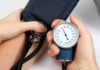
Controlled trials show a clear pattern: give adults the equivalent of two or three cups of coffee, and blood pressure jumps. A major clinical review found systolic pressure rising between 3 and 14 millimeters of mercury and diastolic between 4 and 13 millimeters of mercury shortly after coffee ingestion, confirming a reproducible acute pressor effect.[4] Cleveland Clinic clinicians describe the jump starting within about 30 minutes and peaking near an hour, with the effect most obvious in people who are not regular caffeine users.[6]
Harvard physicians echo the same bottom line: coffee raises blood pressure in people who are not used to it, but not in regular coffee drinkers.[5] That mismatch tells you two things at once. First, your body treats a sudden caffeine load like a small challenge to the system. Second, that response can be trained.
How Your Body Adapts When Coffee Becomes a Habit
Longer-term studies complicate the scary narrative. Researchers following coffee drinkers over time repeatedly find a “tolerance curve.” A National Institutes of Health review notes that individuals who do not regularly ingest caffeine may see an initial blood pressure rise, but that tolerance develops and the effect fades after days of regular intake. A broader review of coffee consumption and blood pressure similarly describes “remarkable and fast” adaptation that attenuates the acute spikes.[4]
Large cohorts back this up. Harvard investigators tracking over forty-five thousand men saw no relationship between coffee consumption and heart attack or stroke risk, even among heavy drinkers.[5] Consumer-health summaries draw the same conclusion: caffeine will nudge blood pressure up short term, but current evidence does not support coffee as a major driver of chronic hypertension in the average person. That does not make coffee a health supplement; it means the evidence does not justify blanket fearmongering bans.
When the Spikes Might Actually Matter: High-Risk and Older Adults
Not everyone lives in the “average person” box. A detailed review highlighted a Polish cohort of older adults where daily coffee drinkers saw systolic pressure climb by about nine millimeters of mercury more over two years than rare drinkers, suggesting that in some aging populations the habit may contribute to sustained elevation.[4] Other work shows that people with very high blood pressure who drink multiple cups daily may face higher cardiovascular death risk, while one cup or green tea did not show the same danger.[4]
Mechanistic studies supply a plausible explanation. Caffeine antagonizes adenosine receptors, triggers norepinephrine release, and activates the renin–angiotensin system, all of which tilt the body toward higher vascular tone and higher pressure.[4] For a healthy fifty-year-old with normal arteries, occasional spikes probably amount to noise. For a seventy-year-old with stiff vessels and long-standing hypertension, repeatedly layering extra pressure could be courting trouble. That is not alarmism; it is prudent risk stratification.
Why Espresso, Decaf, and Genetics Muddy the Picture
Harvard’s coverage points to an uncomfortable twist for simplistic “it is just the caffeine” narratives. In one experiment, espresso raised pressure more than the same dose of pure caffeine, and even decaffeinated espresso lifted systolic pressure in nondrinkers by around twelve millimeters of mercury.[5] Coffee is a chemical soup: polyphenols, diterpenes, and other compounds may modulate vessels and nerves in ways researchers are still mapping out. Treating “coffee” and “caffeine” as identical misses this complexity.
Genetic and lifestyle differences add more confusion. People who metabolize caffeine slowly may experience longer-lasting stimulation and blood pressure elevation than fast metabolizers, even at identical doses.[4] Add sugar, flavored creamers, poor sleep, and emotional stress, and coffee’s role becomes easy to exaggerate or to dismiss.
Practical Rules for Coffee and Blood Pressure
Several practical guardrails emerge from the science. First, if you rarely drink coffee and have a blood pressure check scheduled, skip caffeine for several hours beforehand; that avoids a misleading spike.[5][6] Second, if you already have high blood pressure, especially at severe levels, two or more strong cups daily deserve scrutiny with your clinician rather than casual dismissal.[4] Third, if you drink coffee daily, check your blood pressure at home over a week with and without morning coffee to see your own pattern.
Reasonable moderation aligns with both the data and traditional values: most healthy adults stay under about four standard cups per day, earlier in the day to protect sleep, and away from sugar bombs. When outlets insist coffee is either a silent killer or a miracle longevity elixir, they ignore what the evidence actually shows: a mild, trainable stressor that can be safely enjoyed by most, but not treated as consequence-free for everyone.[4][5]
Sources:
[4] Web – Coffee Consumption and Blood Pressure: Results of the Second …
[5] Web – Coffee and your blood pressure – Harvard Health
[6] Web – Is Caffeine Raising Your Blood Pressure?