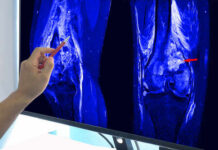

Brain scans on hundreds of children with Attention-Deficit/Hyperactivity Disorder (ADHD) just revealed three distinct patterns in the brain’s outer layer, giving scientists their clearest look yet at why the condition looks so different from kid to kid.
Story Snapshot
- A peer-reviewed imaging study published in JAMA Psychiatry found three ADHD subtypes based on cortical thickness patterns in the brain.
- Researchers studied 446 children with ADHD and 708 children without it, then checked their findings against two separate outside groups of kids.
- The three groups roughly match a severe combined type with emotional struggles, a hyperactive-impulsive type, and an inattentive type.
- The study does not change how doctors diagnose ADHD today; diagnosis still relies on behavior, not brain scans.
What The Brain Scans Actually Showed
Scientists used a method called morphometric similarity network analysis to map how thick different regions of the brain’s outer layer, the cortex, are in kids with ADHD compared to kids without it. The team, writing in JAMA Psychiatry, reported three clear subtypes with different thickness patterns. Subtype one showed thinner cortex overall. Subtype two showed thicker cortex. Subtype three mixed thicker regions with thinner spots in the temporal lobes.
The sample size matters here. Researchers did not build this claim on a handful of scans. They started with 446 children diagnosed with ADHD and 708 children who served as a comparison group. That is a large enough starting pool to treat the clustering result as a real pattern rather than noise from one small lab.
Why Validation Across Groups Strengthens The Finding
A single dataset can produce flukes. This team guarded against that by testing their three-group model against two outside collections of brain scans, including a follow-up wave of the Adolescent Brain Cognitive Development study and the ADHD-200 dataset. The three subtypes held up in both checks, which is the kind of repeat testing that separates a durable scientific signal from a one-time statistical accident.
News coverage translated the technical labels into plainer terms. One group was described as severe-combined with emotional dysregulation, meaning kids who struggle with both attention and impulse control plus strong emotional reactions. A second group leaned mostly hyperactive and impulsive. A third leaned mostly inattentive, the quieter, daydreaming presentation that often gets missed in classrooms.
Some reporting also flagged a practical angle worth watching. Early coverage suggested the three brain-based groups might respond differently to medication, tied to different patterns of receptors for key brain chemicals like dopamine and norepinephrine. If that holds up in future research, it could eventually help doctors pick the right treatment faster instead of relying on trial and error.
What This Study Does Not Prove Yet
This is a research finding, not a new diagnostic rulebook. One news summary made that explicit, noting the authors themselves called these groupings biotypes, not diagnostic categories, and that ADHD is still identified through behavior checklists, not an MRI machine. Parents should not expect a brain scan to replace the standard evaluation their pediatrician already uses.
Two of the three subtypes also line up closely with categories doctors already recognize: predominantly inattentive and predominantly hyperactive-impulsive. That overlap raises a fair question about how much new ground this study breaks versus how much it confirms, with brain imaging, categories clinicians have used for decades.
What Happens Next With This Research
The honest next step is replication. Brain imaging studies built on machine learning have a track record of looking strong in one dataset and weakening when other labs try to reproduce them, so researchers will want more independent teams running this same analysis on new groups of children before anyone treats three subtypes as settled science. Follow-up work tying these brain patterns to genetics, receptor mapping, or actual treatment outcomes would go a long way toward proving these groupings matter for real families, not just for research papers.
Struggling with emotional dysregulation? Check this out! NEW Brain Scan Study Just Split ADHD Into 3 Types https://t.co/5BPumqZYtv via @YouTube
— Vérité (i.e. Learing The Truth) (@Verite411) September 30, 2026
For now, the finding stands as a genuinely interesting data point: ADHD brains do not all look the same on a scan, and that difference maps onto groupings that feel familiar to anyone who has watched a distracted kid, a bouncing-off-the-walls kid, and an emotionally overwhelmed kid all carry the same diagnosis. Common sense already told parents and teachers ADHD is not one-size-fits-all. Now there is a brain scan backing that up.
Sources:
vice.com, healthline.com, adhdevidence.org, newser.com